Decoding Deepfakes: How Synthetic Audio Anomaly Detection Isolates Cloned Voices
Voice cloning technologies have evolved to clone human speech with under three seconds of reference audio. Discover how Veriq AI detects synthetic audio anomalies through neural checks and frequency spectrum analysis.

Voice cloning models can now clone any human voice with high emotional fidelity using a sample as short as three seconds. From financial scams simulating family distress to synthetic political speeches, audio deepfakes have become one of the most pressing threats to informational security.
The Mechanics of Synthetic Voice Synthesis
Modern voice synthesis models rely on neural networks trained on thousands of hours of high-quality speech. These systems split speech into two main components: style/timbre encoding and linguistic encoding. When generating a deepfake, the model maps the target speaker's unique vocal characteristics onto arbitrary text, producing a highly convincing vocal mimicry.
Because these models capture the natural rhythm, breath pauses, and pitch inflections of human speech, human ears can no longer reliably distinguish between a genuine recording and a synthetic clone.
Identifying Synthetic Anomalies
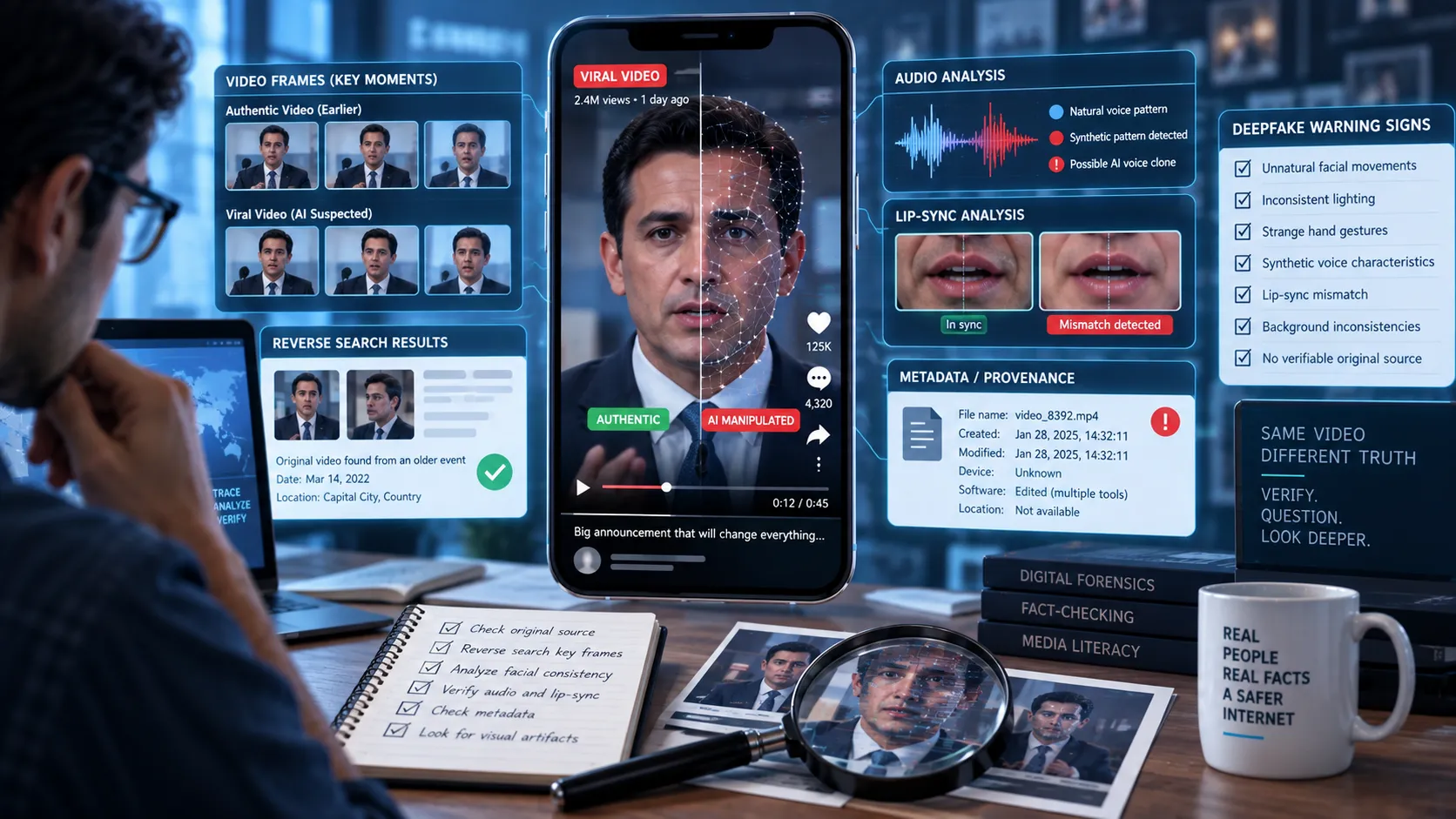
Although deepfakes sound perfect to the human ear, they leave distinct mathematical footprints. When generative models synthesize audio, they produce phase inconsistencies, unnatural frequency cutoffs, and periodic anomalies in the high-frequency spectrum. These are artifacts of the neural vocoders used to reconstruct the waveform from spectrograms.
Veriq AI utilizes a multi-stage neural checker to isolate these anomalies:
- Spectral Analysis: We scan the high-frequency bands (typically above 8 kHz) to detect missing natural harmonic overtones or synthetic spectral patterns.
- Phase Consistency Auditing: Natural human speech has complex phase alignments between different frequency bands. Generative vocoders often create uniform, simplified phase relations that look "too clean" to be real.
- Silences and Transient Artifacts: Humans introduce micro-transients, mouth clicks, and organic breath variations. Deepfake generators often insert mathematically silent gaps or unnatural noise gaps.
Integrated Audio Audits
Our client utility extracts the audio track directly from media links, bypassing platforms' lossy transcoding where possible. The audio file is scanned by our low-latency classification models to produce a "Synthetic Index" score. By combining this spectral audit with factual claim extraction, Veriq AI ensures that both the medium (the speaker's voice) and the message (the claim itself) are thoroughly verified.